


Why Substack Notes Matter
If you’re trying to figure out how to use Substack Notes, here’s my honest take: most people are underusing them. They use Notes the same way a lot of people use X and Facebook posts: for random throwaway thoughts. They post when they remember. They say something vague. Then they wonder why nothing happens.
That is not a strategy.
I think of Notes as the front porch of your publication. Your newsletter is the house. Your paid offer is the back room. But Notes are where people first see you, hear your voice, and decide if they want to come closer.
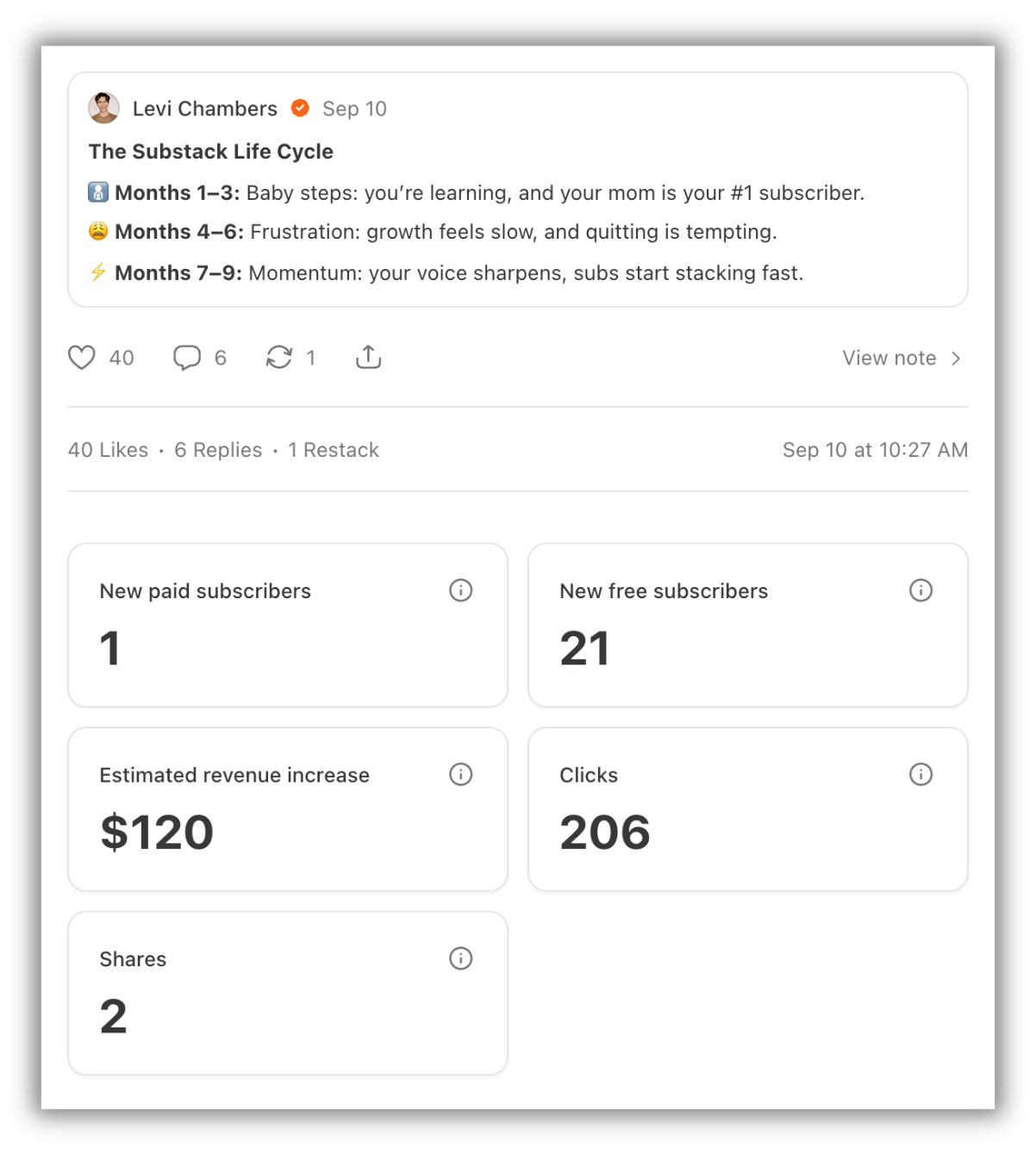
That matters because most people do not subscribe after one touchpoint. They subscribe after enough good ones. They pay after they trust you. And they buy when they feel like you get them.
That is why Substack Notes are so important. They help you stay visible. They help you build familiarity. They help you turn passive readers into active fans. And when you use them well, they can absolutely help you make more money on Substack.
This guide will show you how I think about Substack Notes, what to post, how to write them faster, and how to use Notes to grow a real business. Not just a feed.
Before we get into strategy, we need to get clear on what Notes actually are. Because once you understand the role they play inside your publication, the way you use them starts to change fast.

What Are Substack Notes?
Substack Notes are the short-form layer of your publication. They let you show up between long posts. They let you say something fast. They let readers get a feel for your voice without asking for a huge time commitment.
That is the real power.
A full newsletter asks for focus. A Note asks for a few seconds. That makes Notes easier to consume, easier to share, and easier to publish consistently.
I do not think of Notes as “mini content.” I think of them as momentum content. They keep your publication alive between emails. They keep your ideas moving. And they give people more chances to notice you.
That is important if you want to grow on Substack. Visibility compounds. Repetition compounds. Good ideas compound. Notes help all three.
Here’s what Notes are great for:
Sharing quick lessons
Testing ideas before a full post
Starting conversations
Showing proof
Building authority
Promoting deeper content
Staying top of mind
If your newsletter is the deep dive, Notes are the daily pulse. And once you start seeing Notes that way, their value gets a lot easier to understand. They are not just another place to post. They are one of the easiest ways to create momentum around your work.
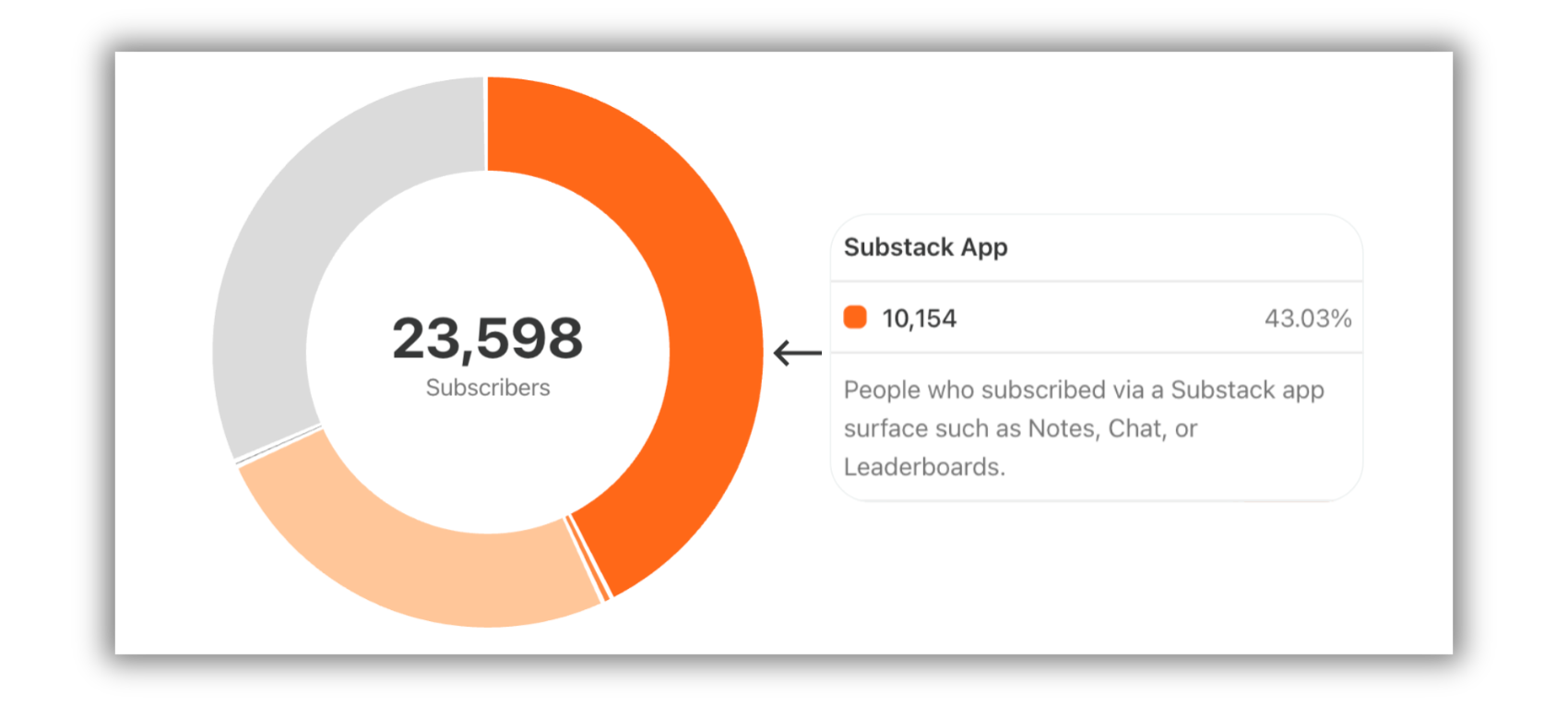
Why Substack Notes Are Great for Growth
Growth usually dies in silence. People stop seeing you. They forget you exist. Then your next post lands cold.
Notes fix that.
When you use Substack Notes well, you create more touchpoints with readers. You give people more chances to discover you, recognize your name, and hear how you think. That makes your publication feel alive. It also makes you easier to remember.
And memory matters.
People subscribe to voices they recognize. They upgrade when they trust the person behind the words. Notes help you build that trust faster because they shrink the distance between you and the reader.
They also help you connect with other writers. That part is underrated. Notes are not only about broadcasting. They are about participating. When you reply, restack, or add a sharp take to someone else’s idea, you stop being invisible.
That is where a lot of growth happens. Not from trying to go viral. From being consistently visible in the right ecosystem.
How Notes will help you grow:
They keep your name in front of readers
They give new people a low-stakes way to discover you
They make your publication feel active
They create more chances for engagement
They open the door to collaboration and crossover
Small moments stack. That is the game.
But growth is only part of the story. Visibility is great, but if you are building a business on Substack, the next question is obvious. How do Notes actually help you make more money?
How Substack Notes Boost Monetization
Let’s talk about money, because that is what The Monetizer is all about.
Attention is nice. Revenue is better.
A lot of people try to monetize too late or too aggressively. They either avoid selling because they feel awkward, or they pitch so hard they scare people off. Notes give you a better path.
Notes help you warm up the audience before the ask. They let you share ideas, show proof, tell stories, and build trust in public. That makes your paid offer feel like the next natural step instead of a random sales pitch.
That is the difference.
People do not buy because you posted a link. They buy because your Notes made them think, “This person knows what they’re doing. I want more.”
Notes support monetization in a few big ways:
They build authority in public
They make your ideas feel consistent and real
They give you more chances to talk about results
They help you test what people care about
They make your sales posts feel warmer
If you are selling a paid newsletter, course, template, coaching offer, community, or digital product, Notes can help. They are not the whole funnel. But they are a strong part of it.
Now let’s talk execution. Because knowing that Notes can drive growth and revenue is one thing. Writing Notes that actually do that is a different skill.
Every Note Needs One Mission
This is where most people make a mess.
They try to make one Note do too much. They try to teach, inspire, entertain, sell, and tell a personal story all at once. That usually creates mush.
I like to give every Note one mission.
Not five. One.
That makes your writing cleaner. It makes your idea stronger. And it makes the reader’s next step obvious.
The best Note missions are:
Teach
Prove
Connect
Spark conversation
Shift a belief
Convert
Let’s break those down.
Teach: Give one quick lesson. Not a whole framework. Just one useful point.
Prove: Show receipts. Share a result, screenshot, number, lesson from experience, or outcome.
Connect: Tell a story. Share a feeling. Let people see your human side.
Spark conversation: Ask a question that invites a real answer.
Shift a belief: Challenge something people assume is true. Strong opinions attract attention.
Convert: Move readers toward one action. Subscribe. Upgrade. Click. Reply. Buy.
A Note with one clear mission feels sharp. A Note with too many goals feels confused.
Once the mission is clear, the next step is making the Note itself stronger. That means understanding what makes a Note easy to read, easy to follow, and worth stopping for.
The Anatomy of a High-Performing Substack Note
A good Note is simple. It does not need to be fancy. It needs to be easy to read and worth reading.
I think the strongest Notes usually have four parts:
A first line that earns attention: If the opening line is weak, the rest does not matter. You need a reason to stop the scroll.
One clear point: Say one thing well. Do not wander.
Clean formatting: Use short paragraphs. Break up the text. Make it easy on the eyes.
A natural ending: You do not always need a CTA, but the Note should land somewhere. End with a takeaway, question, next step, or sharp line.
What strong Notes usually feel like:
Clear
Fast
Specific
Human
Useful
Easy to skim
What weak Notes usually feel like:
Vague
Overwritten
Slow
Dense
Pointless
Too self-focused
A Note does not need to be deep to work. It needs to be clear. That is a huge difference. And if there is one part of a Note that deserves extra attention, it is the opening line. Because you can have a smart point, a strong story, or a great offer, but none of it matters if nobody keeps reading.
How to Write Hooks That Get Read
The first line is the whole Notes game.
You can have a great idea, but if the opening feels flat, most people will never see the rest. That is why I spend more time on the first line than anything else.
A strong hook creates tension. It gives the reader a reason to continue. It makes them feel like there is something worth getting on the other side of the next sentence.
My favorite hook angles for Substack Notes:
Benefit hook: Lead with the outcome.
Example: How I got paid subscribers before I had a big audience.
Proof hook: Lead with a result.
Example: This tiny Note brought in more subscribers than my last full post.
Contrarian hook: Challenge the usual advice.
Example: Posting more is not your problem. Posting better is.
Pain-point hook: Name the frustration.
Example: Getting views but no subscribers? Here’s what is probably wrong.
Curiosity hook: Open a loop.
Example: The simplest change I made on Substack increased conversions fast.
Opinion hook: Say what you actually believe.
Example: Most newsletter creators do not need more ideas. They need a better offer.
A simple hook formula
You do not need to post more on Notes. You need to make each Note pull more weight.
Try this formula: Problem + tension + promise
That is clean. That is clear. That earns the read.
Now that you know how to make a Note readable, let’s make posting easier too. Because a lot of people do not struggle with writing as much as they struggle with deciding what the hell to post in the first place.
What to Post on Substack Notes
You do not need endless originality. You need repeatable formats.
That is what makes Notes sustainable. Once you know your categories, posting gets easier. You stop staring at a blank screen. You stop acting like every Note needs to be genius.
Here are the best things to post on Substack Notes:
Quick lessons
Strong opinions
Personal stories
Screenshots and proof
Behind-the-scenes moments
Mini case studies
Mistakes you made
Things you changed your mind about
Questions for your audience
Excerpts from bigger posts
Reader wins
Soft promotions
Those twelve buckets can carry your whole strategy.
You can also rotate them. That keeps your Notes varied without making your process harder.
A simple mix that works well:
Teach once
Share proof once
Get personal once
Start a conversation once
Promote once
That alone gives you a balanced week. That said, not every Note format will work the same for every creator. What works for a business writer may fall flat for a poet, and what works for a journalist may not make sense for a visual artist. So let’s narrow this down by niche.
The Best Substack Notes for Your Niche
Not every type of Substack Note will work the same for every creator.
A business writer, a poet, a journalist, a fitness coach, and a pop culture creator should not all be posting the exact same way. That is where people get stuck. They copy what someone else is doing, even when it does not fit their niche, voice, or audience.
The best Notes are the ones that match how your readers naturally connect with your work.
Some niches grow through teaching.
Some grow through personality.
Some grow through visuals.
Some grow through curation.
Some grow through strong opinions.
Some grow through community.
Your job is to figure out what your audience wants most from you in a quick, easy-to-consume format.
Start with this question:
Why do people follow you in the first place?
Do they follow you because:
you teach useful things
you have strong taste
you share smart opinions
you tell great stories
you make them feel seen
you inspire them
you help them solve a problem
That answer will tell you what kinds of Notes you should lean into.
If your niche is educational or skill-based
This includes creators in business, marketing, money, productivity, wellness, tech, coaching, self-improvement, and similar spaces.
Your readers want clarity. They want shortcuts. They want someone to make the path feel simpler.
The best Notes for this niche are:
quick lessons
myth-busting Notes
step-by-step tips
mistakes to avoid
mini frameworks
proof Notes
soft conversion Notes
These Notes work because they build authority fast. They show readers that you know what you’re doing and that your longer content is worth subscribing to.
Examples:
The biggest mistake people make when launching a paid newsletter
A simple 3-step system for staying consistent on Substack
What I would do first if I had to grow from zero again
If your niche is personal, lifestyle, or story-driven
This includes creators writing about life, relationships, identity, parenting, grief, healing, travel, or personal essays.
Your readers are often following for connection. They want your perspective. They want honesty. They want to feel something.
The best Notes for this niche are:
short personal stories
reflections
behind-the-scenes moments
vulnerable truths
belief-shift Notes
audience questions
excerpts from longer essays
These Notes work because they build intimacy. They make the reader feel closer to you, which makes your publication feel more human and more memorable.
Examples:
I almost didn’t write this today, and that usually means I need to
The older I get, the more I realize success feels different than I expected
A small moment this week reminded me why I started writing in the first place
If your niche is journalism, commentary, or cultural analysis
This includes news writers, critics, political voices, media analysts, queer culture writers, and creators covering trends, entertainment, or current events.
Your readers follow you for your take. They want context. They want you to help them understand what matters and why.
The best Notes for this niche are:
opinion Notes
quick analysis
reaction Notes
quote-and-comment Notes
curated links with perspective
trend callouts
conversation-starting questions
These Notes work because they show how you think in real time. That makes readers more likely to trust your longer reporting or essays.
Examples:
The part of this story nobody is talking about is ___
This headline misses the bigger shift happening underneath it
Curious whether other people are seeing this trend too
If your niche is creative, visual, or artistic
This includes photographers, designers, illustrators, writers sharing poetry, stylists, filmmakers, and other artists.
Your audience is often drawn to your eye, your mood, your process, and your taste. They want to see how you think and what inspires you.
The best Notes for this niche are:
process Notes
visual Notes
inspiration Notes
behind-the-scenes creation moments
unfinished thoughts
creative lessons
audience participation Notes
These Notes work because they make your creative world feel accessible. They invite people into the process instead of only showing the finished result.
Examples:
The lighting choice changed the whole feeling of this shoot
Lately I’ve been more interested in simplicity than perfection
One thing I’m trying to make more space for in my work right now: ___
If your niche is community-driven
This includes creators whose work is built around identity, belonging, support, fandom, shared values, or a strong sense of “we.”
Your readers are there for connection as much as content. They want to feel included. They want to talk back. They want to see themselves in what you post.
The best Notes for this niche are:
conversation Notes
hot takes
“do you relate?” Notes
community questions
shared language Notes
celebration Notes
response-friendly prompts
These Notes work because they create participation. They turn your publication into a space, not just a feed.
Examples:
What’s one thing you wish more people understood about this community?
Be honest. Did anyone else have this exact experience?
One thing I love about us is ___
If your niche is product, service, or business-led
This includes creators selling coaching, courses, memberships, services, consulting, templates, products, or premium content.
Your audience needs trust before they buy. They need to see that your offer works and that you understand their problem.
The best Notes for this niche are:
proof Notes
objection-busting Notes
educational Notes
client or reader win Notes
behind-the-offer Notes
problem-aware Notes
conversion Notes
These Notes work because they warm people up. They make your offer feel relevant before you ever drop a link.
Examples:
Most people do not need more information. They need a better implementation plan
A client win that reminded me why this process works
I created this because too many people were wasting time on the wrong thing
So that is the bigger point. There is no single perfect Notes strategy for everyone. The goal is to figure out which kinds of Notes feel most natural for you and most valuable to your readers.
How to Choose the Right Note Style for Your Niche
If you’re still not sure what to focus on, use this filter.
Ask yourself:
1. What does my audience come to me for most? Is it information, inspiration, entertainment, insight, identity, or connection?
2. What feels easiest for me to post consistently? The best Notes are not just effective. They are sustainable.
3. What kind of content naturally leads into my paid offer or publication? Your best Notes should create a bridge to something deeper.
4. What gets the strongest response when I post? Your audience will tell you a lot if you pay attention.
If you are still unsure, do not overthink it. You do not need a perfect answer on day one. You just need a simple way to test what fits and build from there.
A Simple Way to Find Your Best Note Mix
You do not need to guess forever. Test a few categories and see what fits.
Start by choosing three core Note types for your niche.
For example:
A business creator might choose:
educational Notes
proof Notes
conversion Notes
A personal writer might choose:
story Notes
reflection Notes
conversation Notes
A culture writer might choose:
opinion Notes
reaction Notes
curated link Notes
A visual creator might choose:
process Notes
inspiration Notes
behind-the-scenes Notes
That becomes your base. Then you build from there. And that is where a lot of creators go wrong. They think they need to find the best strategy overall, when what they really need is the best strategy for their voice, audience, and niche.
The Goal Is Not to Copy. It’s to Align.
This is the part I really want you to get.
You do not need the “best” Notes in some universal sense. You need the best Notes for your audience, your voice, and your niche.
That is what makes a Notes strategy actually work.
When your Notes match what your readers already value about you, everything gets easier. Your writing feels more natural. Your content feels more consistent. Your audience responds faster. And your publication grows in a way that actually fits you.
That is the sweet spot. Once that alignment is there, selling gets easier too. Because the best promotional Notes do not feel random. They feel like a natural extension of the value you already share.
How to Sell on Substack Notes Without Being Annoying
People do not hate selling. They hate feeling handled.
That is good news because it means you do not need to hide. You just need to sell like a human.
The best way to sell on Notes is to make your promotion feel like a extension of your value. Not a break from it. If your Notes are helpful, sharp, honest, and consistent, then a promo Note feels earned.
Here is the cadence I like:
Give value often. Promote clearly. Do not overdo it.
A simple rule is this: most of your Notes should help, teach, provoke, or connect. A smaller portion should sell. That keeps the feed useful and keeps your offer warm.
A few ways to sell without sounding thirsty:
Share the result your offer creates
Talk about the problem your offer solves
Mention what is inside without overexplaining
Use proof when possible
Make the next step obvious
❌ Weak promo:
My course is open. Buy it now.
✔️ Better promo:
I built this because too many people were wasting months guessing. If you want the full system, it’s inside.
That feels different. It feels grounded. Ok, let’s make this practical. Because even the best ideas will not help much if you only post when inspiration randomly shows up. What you need is a rhythm you can actually keep.
A Simple Weekly Substack Notes Strategy
You do not need to obsessively post Notes. You need a consistent cadence you can maintain.
When people say they “can’t keep up” with Notes, what they usually mean is they do not have a system. They are trying to invent fresh content every day. That gets old fast.
I would rather you use a simple weekly structure and stick to it.
Here is a clean weekly Notes plan:
Monday: Teach
Share one useful lesson.
Tuesday: Opinion
Say what you believe. Be clear. Be sharp.
Wednesday: Personal
Tell a quick story or share a behind-the-scenes moment.
Thursday: Proof
Show a result, screenshot, win, or insight.
Friday: Promote
Point readers toward your paid post, product, or offer.
Saturday: Conversation
Ask a question that gets people talking.
Sunday: Reflect
Share a lesson from the week or something you are refining.
That gives you range without making you reinvent yourself daily.
Now, to maintain your notes strategy, I highly recommend creating a Notes bank. It’s super simple to do. Just open a doc and start collecting:
Hooks
Questions
Screenshots
Results
Story ideas
Reader objections
Good one-liners
That way you are never starting from zero. And once you have a cadence, the smartest move is to make each piece of content work harder. You do not need to create everything from scratch. In fact, you absolutely should not.
How to Turn One Newsletter Into 10 Substack Notes
This is one of the easiest ways to grow faster without working more.
Most people write a great newsletter, hit publish, and move on. That is a waste. One strong newsletter can feed your Notes for days.
Here is how I would break one newsletter into multiple Notes.
Pull out:
The strongest first line
The boldest opinion
The best lesson
One useful list
One quote
One story moment
One result
One mistake
One reader question
One CTA teaser
Now you have ten Notes.
That is not repetition. That is leverage.
Your audience did not memorize every line of your last post. You are allowed to reuse your best ideas. In fact, you should. Repetition builds recognition. Recognition builds trust.
Example:
If your newsletter was about getting your first paid subscribers, your Notes could become:
A Note on the biggest mistake new creators make
A Note with one screenshot from your results
A Note with a quick story from your early days
A Note that asks readers what they charge
A Note that promotes the full post
Same source. Different angles. Way more reach. Obviously, none of this matters if you are not paying attention to what actually lands. Repurposing is powerful, but the real advantage comes when you start seeing which Notes drive attention, trust, and action.
How to Measure What’s Working
Do not judge a Note only by how clever you think it is.
Some Notes feel good and do nothing. Some Notes feel almost too simple and quietly drive action. That is why you need to look at patterns.
Here is what I would watch:
Replies
Restacks
Clicks
New followers
New subscribers
Upgrades
Sales tied to a Note
You do not need to obsess over every post. But you should pay attention. Look for what keeps happening.
Ask yourself:
Which Notes get people talking?
Which Notes get shared?
Which Notes drive clicks?
Which Notes attract subscribers?
Which Notes seem to warm people up before a sale?
That is the kind of data that drives improvement.
A Note that gets applause but no action might still be useful for trust. But if your goal is growth, you need to know what actually moves people.
My rule:
Double down on what works. Drop what does not. Improve what is close.
That is how Notes become a system instead of a guessing game. And once you start tracking what works, the mistakes become easier to spot too. Some patterns help your Notes grow. Others quietly kill momentum.
Common Substack Notes Mistakes
You do not need to make every mistake yourself. I’ll save you some time.
❌ Writing too much: A Note should not feel like homework. Keep it tight.
❌ Starting too slow: If the first line does not earn attention, the Note dies early.
❌ Having no point: A Note should leave the reader with something. A lesson, thought, question, or action.
❌ Trying to sound impressive: Clear wins. Smart-sounding fluff loses.
❌ Posting only promo content: If every Note sells, people stop caring.
❌ Never replying: Notes are social. If people engage and you vanish, you waste momentum.
❌ Abandoning good ideas too fast: You do not need a brand-new angle every day. Use your winners again.
❌ Sounding like everyone else: Your voice matters. Your perspective matters. Your experience matters. Use them.
❌ Waiting for inspiration: A strategy beats a mood.
❌ Treating Notes like they do not matter: They matter. A lot.
That last one is the big one. Notes are not filler. They are part of the machine. So if you want to stop reading about Notes and actually build momentum with them, the next step is simple. Put the ideas into action with a short, focused plan.
A 30-Day Substack Notes Growth Plan
If you want momentum, do not overcomplicate this. Start simple and get consistent.
Week 1: Show up
Post once a day. Focus on consistency, not perfection.
Your goal this week:
Get comfortable posting
Test different hooks
Pay attention to what feels natural
Week 2: Find your strongest angles
Rotate content types and see what lands.
Use:
One teaching Note
One opinion Note
One personal Note
One proof Note
One conversation Note
Week 3: Introduce conversion
Start pointing people toward something deeper.
This could be:
Your paid post
Your paid tier
A digital product
A waitlist
A course
A consultation
Week 4: Refine and repeat
Review the month. Find the Notes that drove the most response. Then build from there.
Your 30-day goals:
Build posting momentum
Learn what your audience responds to
Create a repeatable system
Make Notes part of your actual business
Do not wait for perfect. Momentum teaches faster than theory. And to make that even easier, I want to give you something practical you can use right away. Because sometimes the fastest way to build momentum is to stop reinventing the wheel and start with a strong prompt.
Plug-and-Play Substack Notes Templates
These are not scripts. They are starting points. Use them to move faster, then make them sound like you.
Educational Note templates
The biggest mistake I see people make with Substack Notes is ___.
If you want more subscribers, start here: ___.
Most people overthink ___. The simple fix is ___.
The fastest way to improve your Notes is to ___.
Proof Note templates
I tested ___ this week, and here’s what happened.
This small change led to ___.
One Note outperformed my last post because ___.
Here’s what actually moved the needle for me: ___.
Personal Note templates
I used to believe ___, but I was wrong.
The moment things changed for me was when ___.
I wasted way too much time on ___.
What I wish I understood sooner about building online income is ___.
Opinion Note templates
Hot take: ___ is overrated.
You do not need more ___. You need ___.
Most people are focusing on the wrong thing when it comes to ___.
Growth gets easier when you stop ___.
Conversation Note templates
What feels harder for you right now: ___ or ___?
What do you wish someone had told you earlier about ___?
Be honest. Are you struggling more with ___ or ___?
What kind of Notes do you actually stop and read?
Conversion Note templates
I went deeper on this in today’s post.
I turned this into a full template for paid readers.
If you want the complete system, it’s inside ___.
I built a step-by-step version of this for people who want the full playbook.
Save these. Use them. Customize them. Let them make your life easier. At this point, you do not need more convincing. You need consistency. Because that is where the real magic of Notes starts to show up.
Substack Notes Compound
This is what I want you to remember.
Substack Notes work best when you stop treating them like random social posts and start treating them like a growth system. They help you stay visible. They help you sharpen your voice. They help readers trust you faster. And they make it easier to sell because you are not showing up cold.
That is the real win.
You do not need Notes to be perfect. You need them to be clear, consistent, and connected to your business. One good Note will not change everything. But a month of good Notes can absolutely change your trajectory.
That is how compounding works. Quietly at first. Then all at once.
So stop lurking. Stop overthinking. Stop acting like every Note has to be some masterpiece.
Pick one idea. Give it one mission. Write a stronger first line. Post it.
Then do it again tomorrow.